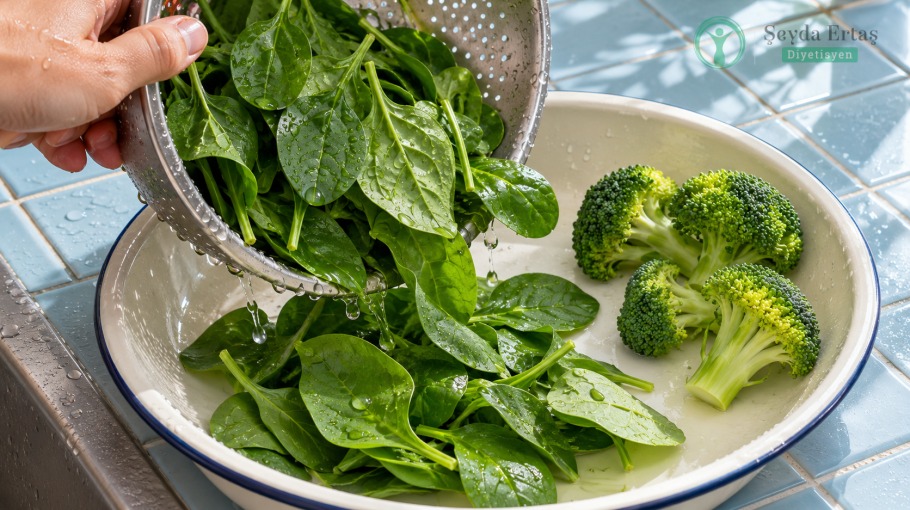
Dark leafy greens are among the richest food sources of vitamin K. What goes into the salad bowl matters as much as the size of the bowl. A cup of raw spinach and a cup of iceberg lettuce supply very different amounts. If you take warfarin, you can still eat salad. Your anticoagulation team needs to know what you usually eat and whether that pattern is about to change. [1] [2]
How much vitamin K is in a serving?
| Food | Reference serving | Approximate vitamin K |
|---|---|---|
| Raw spinach leaves | 1 US cup, about 30 g | 145 mcg K1 |
| Chopped, boiled broccoli | ½ US cup | 110 mcg K1 |
| Raw iceberg lettuce | 1 US cup | 14 mcg K1 |
| Raw blueberries | ½ US cup | 14 mcg K1 |
| Natto (fermented soybeans) | 3 oz, about 85 g | 850 mcg K2 as MK-7 |
The figures are in micrograms (mcg). A US measuring cup is a volume measure. If you use a kitchen scale, the guide to a 30 g serving of raw spinach shows how much leaf the reference cup holds. Cook that same spinach and it takes up much less space. A full cup of cooked spinach is a different portion. For half a cup of chopped, boiled broccoli, the reference weight is 78 g after cooking. [1]
If spinach is too strong for an entire salad, mix a few leaves into the lettuce you already like. A little oil in the dressing helps the body absorb vitamin K1 from the leaves. Neither a large amount of oil nor a special daily salad is required. [1]
Would you like to receive professional diet counseling?
Yes, I DoWhere do K1 and K2 come from?
Vitamin K1, also called phylloquinone, is found in leafy greens, broccoli and some vegetable oils. Vitamin K2 is the collective name for several menaquinones. Natto is particularly rich in one of them, MK-7. Some cheeses supply menaquinones too, but the culture and the way the cheese is made affect the amount. The value for natto cannot tell you how much K2 is in a slice of cheese. [1]
Vitamin K is needed by proteins involved in normal blood clotting and bone metabolism. Describing K1 as the blood vitamin and K2 as the bone vitamin misses that shared role. Research has not established that taking K2 drops or eating a particular cheese will prevent fractures or calcium build-up in the arteries. If you have osteoporosis, it can be more helpful to look at protein and vitamin D in your meals when planning what to eat. [1]
Can you still eat greens while taking warfarin?
Say you usually have a small salad with dinner. Dropping it altogether when you start warfarin changes your intake. So would adding a large spinach smoothie every morning. Blending the leaves does not remove their vitamin K. Do not skip a tablet or change your dose yourself because of something you ate. Your anticoagulation team uses your INR result and treatment history to advise you. [3] [2]
At your appointment, describe a normal week. How often do you have a side salad, spinach as a main dish or a generous handful of fresh herbs? A few sprigs sprinkled over soup and a whole bunch chopped into salad are quite different portions. These serving examples for fresh cilantro can help if you cook with it often. Contact your team before a substantial change, such as switching to a vegetarian diet or starting a supplement that includes K2. [3]
Warfarin and apixaban are both called blood thinners, yet their food advice differs. With apixaban or rivaroxaban, the vitamin K restrictions associated with warfarin do not usually apply. If you are unsure which advice fits, take the medicine pack to your pharmacist. [4]
Personalized online diet program. Start now!
Book OnlineDo you need K2 with vitamin D?
A vitamin D prescription does not automatically call for a K2 supplement. Check the ingredient list. Two bottles both labelled D3 can have different contents if one also contains MK-7. Show the entire label to your pharmacist before buying it, particularly if you take warfarin. Micrograms in a drop and grams of vegetables on a plate describe different quantities. [1] [2]
US adequate intake values for adults aged 19 and older are 90 mcg a day for women and 120 mcg for men. They describe nutritional intake for healthy populations. They cannot tell you how to adjust warfarin or diagnose a deficiency from one day’s meals. If fat absorption is a concern or you have had intestinal surgery, discuss your individual needs with your clinician. [1]
Work with the vegetables you already enjoy
Bring two salads you often make and a cooked vegetable dish to your appointment. We can work out portions that fit your routine and any advice from your treatment team.