

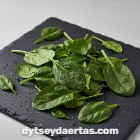
Raw spinach portions and iron
Raw spinach provides 23 kcal, 2.86 g protein and 2.2 g fiber per 100 g. A salad may use much less: the USDA 30 g cup of raw leaves supplies about 7 kcal, 0.86 g protein and 0.66 g fiber. Dressing, cheese and nuts contribute their own nutrients to the finished salad.
In a spinach salad with walnuts and pomegranate, weigh the dressed salad with the nuts included.
A cup, a handful or a leaf count?
The reference cup weighs 30 g and provides about 7 kcal. Two such cups, 60 g, provide about 14 kcal and 1.32 g fiber. Leaf size and packing vary, so a fixed leaf count is a poor way to measure 100 g. Remove roots and large stems, then weigh the edible leaves. A few leaves in a sandwich and a large salad bowl should not be logged as the same amount.
Raw versus cooked spinach
Spinach loses volume during cooking, so a cup of cooked leaves is a different amount of food from a cup of raw leaves. Use the raw table for a raw weight and a boiled, drained reference for a weight measured after boiling and draining. Count added oil separately. More nutrients in a densely packed cooked cup does not mean cooking creates protein or iron.
How much iron does it contain?
Raw spinach contains 2.71 mg iron per 100 g, or about 0.81 mg in the 30 g cup. That cup also supplies 167 mg potassium and 8.43 mg vitamin C. The body does not absorb all the iron listed for a plant food. NIH guidance explains that vitamin C foods eaten at the same meal can improve absorption; peppers or tomatoes are practical salad additions. Spinach alone is not a treatment for iron deficiency.
Preparing leaves to eat raw
Rinse trimmed leaves under running water and use clean utensils; do not wash produce with soap or detergent. FDA guidance notes that rinsing can reduce microbes but cannot remove them all. Packs labelled pre-washed and ready-to-eat do not need another wash. The nutrition table cannot determine a suitable daily amount for every individual.
Source and measurement
Composition follows USDA SR28 11457, raw Spinacia oleracea. Vitamin A uses µg RAE. The iron explanation comes from NIH and preparation advice from FDA.



