

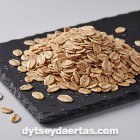
Rye-flake calories and fibre
The dry rye-flake reference gives 326 kcal per 100 g. A weighed 40 g breakfast amount provides 130 kcal, 6.64 g fibre and 2.84 g protein. Those figures describe plain dry flakes, not sweetened cereal or fruit muesli.
Adding milk or yogurt
Follow the preparation directions on the pack. Some heat-treated flakes can be eaten after soaking briefly, whereas products requiring cooking need that step. Fun&Fit, for example, advises waiting 5–10 minutes after adding a drink to its plain rye flakes. Weigh the flakes before adding liquid to keep track of the dry amount.
Combining 40 g flakes with 150 g of the plain whole-milk yogurt reference gives approximately 222 kcal and 8.05 g protein. Water adds no energy on its own; milk, yogurt, dried fruit and honey are separate ingredients. A 100 g serving of the prepared bowl is not equivalent to 100 g dry flakes.
Rye flakes versus oat flakes
They are flakes made from different grains. Using both for breakfast does not make their fat, protein or fibre values interchangeable. Whole rye grain also needs a different preparation, while rye flour is a ground ingredient. Calculate from the dry weight and label of the product you actually use.
Rye is not gluten-free
Rye naturally contains gluten, so rye flakes are not a gluten-free substitute for oats in a coeliac diet. “Plain” or “whole grain” does not establish gluten-free status. Fibre content and gluten content are separate properties; a high-fibre cereal is not automatically suitable.
Source note: Czech Food Composition Database 0615 supplies the dry-flake basis, with 62.3 g available carbohydrate and 16.6 g fibre per 100 g recorded separately. Blank mineral and vitamin entries remain unknown. Fun&Fit instructions are a product-specific preparation example. Gluten information follows NIDDK guidance.


