

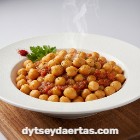
Cooked chickpea calories refer to the drained, boiled weight
Chickpeas boiled without added salt or oil provide 164 calories per 100 grams. Weigh the cooked chickpeas after draining the cooking water. Dry chickpeas absorb water as they cook, so 100 grams of dry seeds cannot be compared directly with 100 grams of the finished food. The reference used here is the USDA entry for mature chickpeas, boiled without salt. [1] Bitter lupin alkaloids and preparation safety require a separate assessment; chickpea methods should not automatically be applied to other legumes.
Calories in a cup, half a cup or a spoonful
The USDA household measure is 164 grams per cup of cooked chickpeas, giving 269 calories. Half of that amount is 82 grams and 134 calories. Cups used at home vary; the reference is not a promise that every drinking glass holds 164 grams.
A spoonful weighing 15 grams provides 25 calories. Four spoonfuls of the same size, 60 grams in total, provide 98 calories. A heaped spoon weighs more than a level one. For a bowl or a handful, enter the actual food weight in the calculator; a 150-gram serving provides 246 calories.
Are chickpeas a carbohydrate or a protein food?
They contribute both. A 100-gram cooked portion contains 27.42 grams of carbohydrate, 8.86 grams of protein and 7.6 grams of fibre. At 150 grams, the protein contribution is 13.29 grams. Calling chickpeas a plant protein food does not remove their carbohydrates from a meal calculation.
Adding chickpeas to a leafy salad changes its protein and carbohydrate content, not just its volume. When choosing between chickpeas and rice, compare the portions and their fibre and protein as well as calories. Neither food has to win every comparison; their role in the meal matters more than a blanket “healthier” label.
Can I eat chickpeas while trying to lose weight?
Yes. Decide how you will use them: a small addition to a salad and a main meal need not contain the same amount. In an arugula salad with 60 grams of chickpeas, count the chickpeas, dressing and other toppings separately. If rice or bread is served alongside, those foods also contribute carbohydrate.
For insulin resistance or diabetes, chickpeas are not a treatment or an unlimited food. Match the carbohydrate portion to the rest of the meal and your individual care plan, including medicines if used. Fibre does not guarantee a particular blood glucose response. [2]
Why can chickpeas cause gas?
Some carbohydrates in legumes reach the large intestine, where bacteria break them down and produce gas. People tolerate different amounts. Try a smaller serving rather than a large bowl and note how much you ate and any symptoms. Cooking the seeds until tender does not make them gas-free. Persistent or troublesome symptoms deserve an individual review rather than automatically removing all legumes from your diet. [3]
Raw, soaked, canned and roasted chickpeas are different entries
Soaking alone does not turn dry chickpeas into the boiled food described here. The raw-versus-cooked weight distinction for green pigeon peas illustrates the same issue in another pulse; each species still needs its own entry. For canned chickpeas, use the label for the drained product. Count added oil and other ingredients in a chickpea stew or a pan-fried dish. Roasting boiled chickpeas until crisp removes water, so their calories per 100 grams can change. The plain boiled figures should not be used for dry seeds, roasted chickpea snacks or a complete recipe.
If you need help fitting portions around diabetes care, explore individual nutrition counselling for diabetes.
In a prepared mixture such as Dardanel Fit chickpea tuna, chickpeas are only one ingredient. The historical 220 g product reference provides about 315 kcal and 22.66 g protein; a plain-boiled-chickpea panel cannot describe the entire container.
Zucchini, cabbage and chickpea soup needs a whole-recipe calculation too. Its roughly 2.8 g protein per 250 g cannot be evaluated as though all 250 g were boiled chickpeas; vegetables, water and oil also contribute to the weight.
In particular, the canned-chickpea entry including liquid counts solids and liquid together; its per-100-g value does not apply to beans you have drained.


