

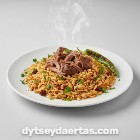
Dietitian's Tips for Consuming Barley Noodle Pilaf with Meat
In this beef-and-orzo pilaf recipe, a 150 g cooked portion provides about 172 calories and 7.38 g protein. A larger 250 g plate provides about 287 calories and 12.30 g protein. The figures include the beef, added fats and stock.
Use cooked weight rather than spoonfuls
The source gives 399.03 calories for a 347 g serving. That larger portion contains about 40.52 g carbohydrate, 17.07 g protein and 18.28 g fat. Spoon size and how generously it is filled vary; weighing the pilaf on your plate gives a clearer basis than counting a few spoonfuls.
The amount and fat content of the meat also affect the result. Weighing only the pasta and leaving out the meat, or adding the recipe’s butter a second time, would not match this reference.
Adding 100 g plain whole-milk yogurt beside 150 g pilaf gives about 233 calories and 10.85 g protein using the two selected references. Yogurt is additional because it is not included in the pilaf recipe.
Orzo is pasta, not rice or barley grain
Turkish arpa şehriye is wheat pasta shaped like small grains. It does not use the same nutrition table as rice or boiled barley. The reference recipe contains 150 g fatty beef, a cup of orzo, a tablespoon each of vegetable oil and butter, water, stock, salt and black pepper.
The beef is first browned in vegetable oil, cooked with water and drained. The orzo is toasted in butter before the beef and stock are added for further cooking. Water absorbed by the dry pasta changes the finished weight; a cup of dry orzo cannot be counted as the same weight of cooked pilaf.
Recipe and calculation limits
The sources are the Diyetkolik recipe and its matching nutrition record. These are recipe estimates, not a new laboratory analysis. Spoon and cup weights and the final batch yield were not supplied and have not been invented. The source’s vitamin A value in IU has not been relabelled as micrograms RAE.


