

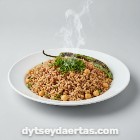
A weighed portion of cooked pilaf
The dovme pilaf reference used here provides 239 calories per 100 g and 359 per 150 g. A 150 g serving has 47.7 g carbohydrate, 21.15 g protein and 7.65 g fat. These figures describe a named dish entry, rather than every homemade wheat pilaf.
The recipe makes a difference
Dovme pilaf uses wheat grains, with versions containing meat, chicken or chickpeas. One lamb version, for example, combines wheat, chickpeas, lamb and butter. The complete recipe behind this nutrition entry is not published, so its protein value cannot tell us how much meat it contains.
For your own pan, record the dry wheat, meat, chickpeas and fat separately. Then weigh the cooked dish and calculate the share you serve. Water absorbed during cooking changes the weight; it does not represent extra wheat or extra calories.
The dry ashure-wheat batch calculation can be used when adding the grain to your own ingredient list. A bulgur pilaf instead uses a differently processed grain and its own oil-to-water ratio, as the tomato bran-bulgur recipe explains. The shared word pilaf does not give the two dishes one composition.
Beef-and-orzo pilaf uses wheat pasta in place of wheat kernels; the two cooked dishes do not have interchangeable nutrition values.
A plate is not a fixed weight
The source includes a 210 g plate example, which works out to 503 calories. If your portion weighs 150 g, use the 359-calorie example instead. A number of spoonfuls is less precise because spoon size and how generously it is filled can vary.
Count yoghurt or another dish served alongside it separately. If you also serve bread, include its weight in the meal calculation.
Source note: Diyetkolik’s dovme pilaf entry gives 239.4 calories per 100 g. Sahrap Soysal’s lamb version illustrates recipe variation; its ingredient quantities were not assigned to this table. The exact recipe, sugars and some micronutrients remain unknown. Do not apply this panel to plain boiled or dry wheat.


