Oil is included in the prepared salad dressing
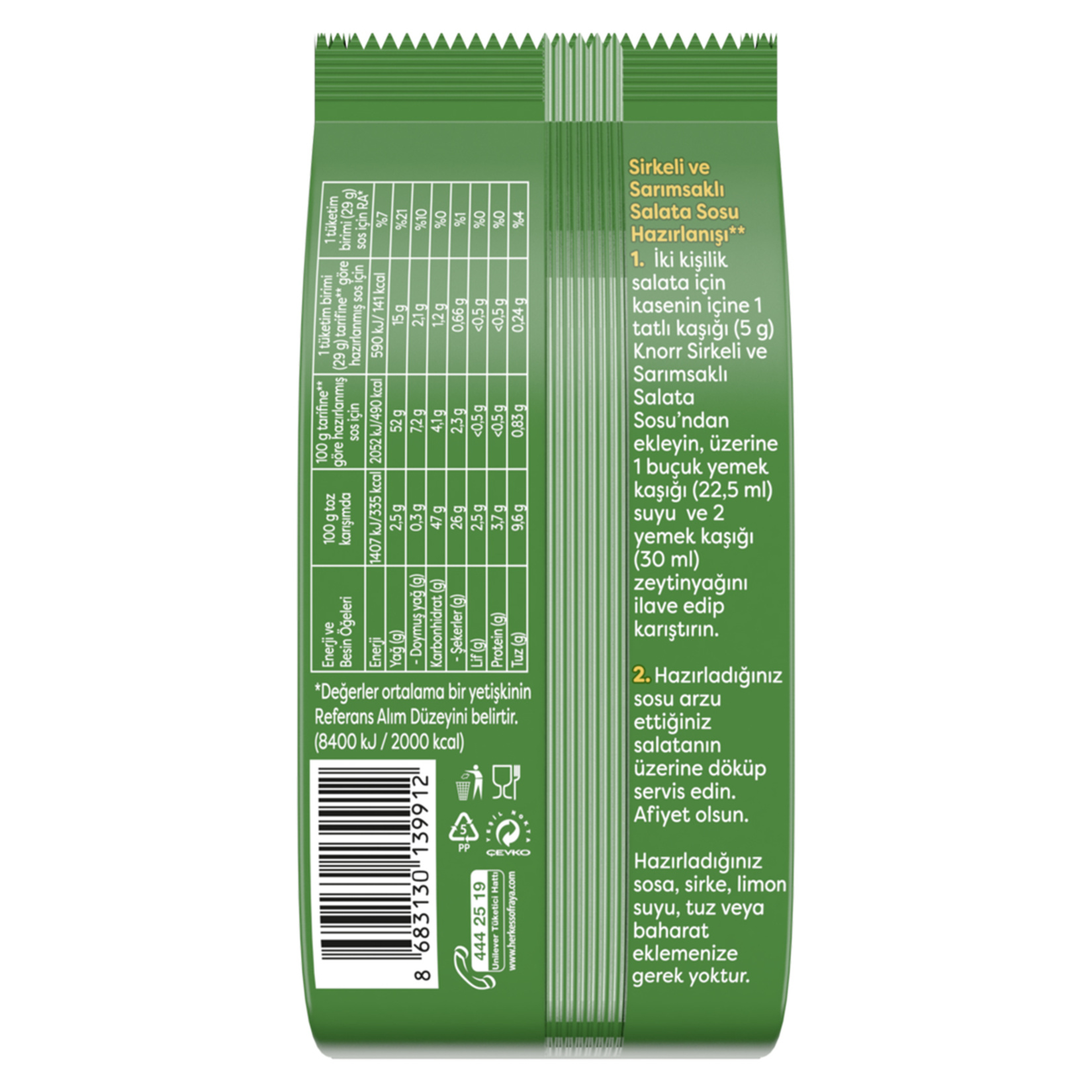
A weighed 15 g of Knorr vinegar and garlic dressing prepared according to the label contains 73.5 calories and 7.8 g fat. Using 30 g gives 147 calories. A drizzle can look small, but the olive oil in this dressing is already part of its nutrition figures.
Seasoning and dressing are different
The examined 40 g seasoning packet directs you to mix 5 g dry seasoning with 22.5 ml water and 30 ml olive oil for two salads. The table here describes dressing prepared that way. It does not represent 15 g of dry powder or plain vinegar. Changing the oil amount changes the preparation, so the same finished table would no longer apply.
The difference between cider vinegar and an oily dressing applies here too: a vinegar flavour does not reduce the energy supplied by olive oil.
A spoon or a scale?
The 15 g example is a weighed amount, not a claim that every tablespoon holds 15 g of dressing. Mix the dressing thoroughly and weigh the amount you add. That 15 g contains about 0.62 g carbohydrate, 0.35 g total sugar and 0.12 g salt. Its oil is already counted. Only oil added separately should be counted again.
The honey mustard dressing portion calculation also explains weighing the bottle before and after pouring. The same spoonful of two different dressings need not weigh the same.
Different calculations on the packet
The prepared 100 g column gives 490 calories. The packet’s 141 calories for 29 g differs from 142.1 calculated from that column; this calculator uses the 100 g basis. Protein and fibre are below 0.5 g per 100 g, not exact zeros. The dry seasoning’s unexplained energy-to-macronutrient discrepancy was not resolved by substituting the prepared figures.