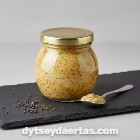
How much mustard is in a spoonful?
From a thin spread to a full spoon
A 5 g teaspoon of yellow mustard provides about 3 kcal and 55 mg of sodium. Spread 15 g over a sandwich and that rises to about 9 kcal and 166 mg of sodium. Salt levels differ between brands, so check your jar when comparing two mustards.
Using mustard in a dressing
If you whisk 15 g of mustard into a lemon and olive oil dressing and divide it evenly between two plates, the mustard contributes about 83 mg of sodium per plate. The oil brings its own calories. The same distinction matters with a bottled honey mustard or creamy mustard dressing: its weight is not all plain mustard.
Kühne wholegrain mustard has different declared sugar and salt amounts; use its own label instead of this generic yellow-mustard table.
The condiment behind the figures
USDA SR28 entry 02046 for prepared yellow mustard gives 60 kcal and 1,104 mg of sodium per 100 g. These are values for the condiment as served, not for powdered mustard seed.