

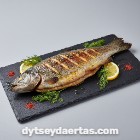
Trout nutrition depends on the species, preparation and edible weight. The reference here is raw farmed rainbow trout: 100 g edible fish provides 121 calories and 18.78 g protein. The head, bones and any other parts you will not eat do not belong in the edible weight.
Dietitian's Tips for Consuming Trout
How much protein is in one trout?
There is no fixed amount per fish. A portion weighing 150 g of raw edible fish provides about 182 calories, 28.17 g protein and 7.68 g fat. At 200 g edible weight, the figures are 242 calories, 37.56 g protein and 10.24 g fat. A whole fish purchased at 200 g does not yield 200 g of edible flesh.
Baking or steaming changes weight as moisture is lost. Raw 150 g and cooked 150 g are not interchangeable portions. Count added oil and sauces separately; without a measured recipe yield, the raw figures cannot establish an exact cooked value per 100 g.
Omega-3 fats and vitamin B12
The reference lists 140 mg EPA, 483 mg DHA and 4.01 µg vitamin B12 per 100 g. A raw edible 150 g portion therefore supplies about 935 mg EPA plus DHA and 6.02 µg B12. EPA and DHA are already part of the portion’s 7.68 g total fat, not extra fat to add again. Composition varies with growing conditions.
The raw Chinook salmon reference supplies about 1.95 g EPA plus DHA per 100 g, against 0.623 g for the farmed rainbow trout used here. Even at equal raw edible weight, species differ; one omega-3 figure cannot describe all fish.
The distinction between EPA, DHA and plant ALA explains why fish amounts are not interchangeable with the omega-3 figure for walnuts or seeds. The trout’s EPA and DHA content is not a supplement-dose recommendation.
Cooking and holding the fish
Use a food thermometer in the thickest part; FDA guidance specifies an internal temperature of 145°F, approximately 63°C, for fish. Thaw frozen fish in the refrigerator. Do not leave it unrefrigerated for more than two hours, or one hour above 90°F, approximately 32°C. The same holding limits apply during serving and storage after cooking.
Sources and units
Nutrition follows Turkomp 04.01.0001; handling guidance follows the FDA seafood guide. Vitamin A is reported as 31 RE and is not copied directly into the RAE field. Zero carbohydrate is the database’s theoretical convention for unprocessed fish. Unreported fibre and vitamin C remain unknown.


