

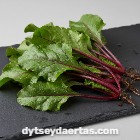
Beet greens are the leaves, not the beetroot
Trimmed raw beet greens provide 22 calories and 3.7 grams of fibre per 100 grams. USDA's cup of raw leaves weighs 38 grams and provides 8 calories. The table does not describe beetroot, beet juice or strained leaf tea. If you have boiled the root, use the cooked beetroot portion calculation. The reference excludes stems and bruised or old leaves from edible weight. [1]
A raw cup and a cooked cup are different amounts
A raw cup weighs 38 grams; a cup of boiled, drained greens in a separate USDA entry weighs 144 grams. The cooked reference contains 27 calories per 100 grams, or about 39 calories per 144-gram cup. Multiplying a cooked cup weight by raw-leaf nutrients mixes two entries. The calculator above uses raw trimmed leaves.
USDA also lists 32 grams for a raw leaf, but real leaves vary. Weigh the usable leaves rather than assigning a fixed weight to every bunch. Rice, oil or other ingredients added to a cooked dish need their own calculation.
How much iron and fibre do beet greens provide?
The 100-gram raw reference contains 2.57 mg iron, 117 mg calcium, 30 mg vitamin C and 316 µg RAE vitamin A. The source also lists 400 µg vitamin K. A 38-gram raw cup contributes 0.98 mg iron and 1.41 grams of fibre. A small salad portion should not be credited with all the nutrients in 100 grams.
Providing iron is different from treating anaemia. Pairing plant-iron foods with vitamin C can be part of meal planning; diagnosed iron deficiency still needs assessment and appropriate treatment.
Can beet greens be eaten raw or used like spinach?
Yes. Wash the leaves thoroughly under running water. Tender leaves can be chopped into a salad; tougher ones can be cooked in soup or a vegetable dish. Using them in place of spinach does not give them spinach's nutrient profile, and neither vegetable is universally better.
Leafy greens can join beans, grains and other vegetables in a meal. The guide to pairing vitamin C with pulses gives practical combinations. A risotto or stuffed-leaf dish includes its rice and oil, not just leaf calories. Questions about one beetroot a day or beet juice refer to a different part of the plant.
What if you take warfarin?
Large changes in vitamin K intake can alter warfarin's effect. Discuss your usual leafy-green portions with the team monitoring treatment instead of suddenly eating much more or cutting out all greens. Keep the intake reasonably consistent; this is not a rule that applies identically to every blood-thinning medicine. The same portion-consistency question applies to other leafy greens such as collards. [2]



