

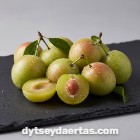
Dietitian's Tips for Consuming Plum
100 g of edible raw plum provides 46 kcal, 11.42 g carbohydrate and 1.4 g fibre. Remove the stone before weighing. Fruit size varies, so a count of plums is less precise than their edible weight.
One plum or a plate of plums
The source’s reference plum weighs 66 g without its stone and supplies about 30 kcal. Two of that size weigh 132 g and provide about 61 kcal. A weighed 150 g portion supplies 69 kcal, 17.13 g carbohydrate and 2.1 g fibre. These are example weights, not a fixed size for every green plum or damson.
Does a tart plum contain sugar?
The general raw-plum record reports 9.92 g total sugars per 100 g, or 14.88 g per 150 g. A tart taste does not mean sugar free. Cultivar and ripeness can affect the fruit; jam and dried prunes should also be calculated from their own values.
Adding chopped plums to food
Weigh pitted plums before adding them to yogurt or oats. Yogurt, oats, honey and other ingredients contribute to the meal separately. If you cook the fruit and evaporate water, 100 g of the finished purée no longer represents 100 g of the starting raw fruit.
The separate cooked-plum example gives about 71 kcal per 150 g, rather than a value for every home recipe. Simply mashed fresh plums should not be calculated using the table for concentrated plum paste.
Source note
The reference is USDA SR28, record 09279 for raw plums, not a cultivar-specific analysis. Vitamin A is 17 µg RAE per 100 g. Reported zero sodium and cholesterol are retained.



