

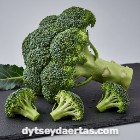
Nutrition in 100 g raw broccoli
The edible portion of raw broccoli provides 34 kcal, 2.6 g fibre and 89.2 mg vitamin C per 100 g. Its 2.82 g protein contributes to the meal, but an equal weight is not a protein-equivalent replacement for meat, eggs or pulses.
Leafy broccoli rabe with small buds is a different vegetable. If the product is sold as rapini, use its own entry rather than the ordinary broccoli table.
Florets, stalks and a chopped cup
An 80 g amount weighed after removing inedible parts provides 27 kcal and 2.08 g fibre. Include tender stalk if you plan to eat it. Heads, bunches and individual florets vary in size, so counting them is less precise than weighing the edible amount.
USDA's reference cup of chopped raw broccoli weighs 91 g and provides 31 kcal, 2.37 g fibre and 2.57 g protein. It is a defined source measure, not the weight of every glass or bowl filled with broccoli.
Eating it raw or cooking it
Wash raw broccoli under running water before eating, clean between the florets and discard rotten pieces. Do not use soap or detergent. Clean knives and boards that have touched raw meat before preparing vegetables to prevent cross-contamination.
Boiling and steaming change weight and nutrient composition. Use a cooked entry for cooked broccoli rather than applying the raw vitamin C figure directly to hot soup. Cooking time, discarded water and the amount eaten matter; no single method can be promised to preserve every nutrient best.
For a finished dish, use a table covering all ingredients, such as the creamy broccoli soup example; raw broccoli values alone are not enough.
Dressings and soup change the calculation
Yoghurt, cheese, mayonnaise or oil served with broccoli need their own quantities. Creamy broccoli soup is a separate recipe containing water, cream and other ingredients: 100 g soup is not 100 g broccoli.
Source note: Values use USDA SR28 entry 11090, Broccoli, raw. Vitamin A remains 31 µg RAE per 100 g. Washing and separation advice follows the FDA produce-safety guide.



