

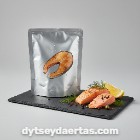
Nutrition in the 80 g salmon pouch
An 80 g amount of Dardanel salmon pouch provides 185 kcal and 17.04 g protein. Half, weighing 40 g, contains 92 kcal and 8.52 g protein. Both fish and oil are included; the small pouch is not nutritionally identical to the same weight of plain salmon fillet.
Counting oil when making a salad
The ingredients are Turkish salmon, olive oil, lemon juice and salt. If the pouch oil goes into the salad, it is already counted in the product panel. Extra olive oil poured over the bowl is an additional ingredient. Draining some oil changes the meal, but without a separate drained analysis there is no exact new calorie value for the remaining fish.
The canned salmon panel lists 305 kcal and 24.5 g fat per 100 g, compared with 231 kcal and 16.1 g fat for the pouch. Both declare 21.3 g protein. The same fish name does not make the two preparations nutritionally identical.
Salt and omega-3
The 80 g amount contains 1.36 g salt, 1.68 g saturated fat and about 234 mg EPA+DHA from the manufacturer's declaration. Half contains 0.68 g salt. Capers or pickles in a salad add their own salt; a lemon flavor does not make the salmon salt-free.
Salmon and sardine examples in the omega-3 food-source comparison refer to their own species and preparations. For the ready pouch, use its declared EPA+DHA amount instead of transferring a value from those examples.
Checking older packaging
The 17 g protein statement on the 80 g front pack agrees, after rounding, with the calculated 17.04 g. Older 85 g packaging lists a different 55 g serving and different nutrient values. Check both the weight and the panel on your pouch instead of combining one version's serving size with another version's calories.
Ready to eat and storage
The product is ready to eat. The manufacturer allows unopened storage at room temperature until the best-before date. After opening, it specifies keeping the product covered with oil in a closed container at 4°C and consuming it within two days. Follow the instructions on your package.
Source note
The manufacturer's 231 kcal per 100 g declaration was selected with protein and fat from the same panel. The listed 928 kJ does not match that calorie figure, so it was not used to invent a replacement energy value. Fiber and unreported micronutrients remain unknown; a zero-fiber statement on older packaging was not transferred.


