Counting the powder in a cup of dibek coffee
Dibek coffee calories depend on the product. The table uses Billur Necmettin's dry creamer-containing blend: 510 kcal per 100 g, or 51 kcal for a weighed 10 g amount. Water adds no energy; added milk and sugar require their own calculation.
How does it differ from plain Turkish coffee?
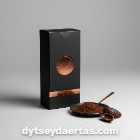
The example combines Turkish coffee with whitener, coconut oil, cocoa and cardamom flavouring, and carries a milk warning. Other manufacturers sell dibek made solely from ground roasted coffee. The shared name does not establish a shared formula.
Whiteners such as Coffee Mate added separately to coffee are different products. Whitener already in a dibek premix belongs to its own nutrition panel; count it again only if you actually add more.
Does preparing it without sugar make it calorie-free?
No. Fat and carbohydrate in the blend still provide energy. A 10 g amount contains 6.1 g carbohydrate and 2.7 g fat. Carbohydrate cannot all be counted as sugar; the source does not declare total sugars.
Using 20 g powder raises the calculation to 102 kcal. Spoon sizes and filling vary, so a dessert spoon is not assigned a fixed weight. Entering the whole water-filled cup's weight as dry coffee would greatly overstate the amount. For calorie tracking, separate the powder from any milk or sweetener added.
Adding 5 g granulated sugar to 10 g dry blend brings the ingredients to about 70 kcal before any milk. Leaving out the added sugar removes its roughly 19 kcal contribution; the blend still supplies 51 kcal.
Label example
The reference is A101's Billur Necmettin 100 g product information. Sugar, fiber, saturated fat and caffeine amounts are unverified. Use the label on your own product when its formula differs.