

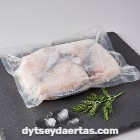
What is mahi mahi, and what does it provide?
Mahi mahi is a fish also called dolphinfish, not the marine mammal dolphin. This wild-caught frozen reference provides 84 kcal, 19.8 g protein and 0.38 g fat per 100 grams of raw edible fish. It is a lean protein option; portion size and added cooking fat determine how it fits your meal.
Taste, texture and portion size
NOAA describes a mild, slightly sweet flavour and fairly firm flesh that separates into large flakes. It works with vegetables in a baked or pan-cooked meal. Because it is lean, check the internal temperature rather than cooking it for so long that it dries out, and measure any added oil.
A fillet is not a standard weight. Our weighed 150 g raw example supplies 126 kcal and 29.7 g protein. Four ounces, approximately 113 g, supplies 95 kcal and 22.37 g protein. These are calculation examples rather than a daily prescription. Cooking removes water, so cooked grams should not be entered directly into a raw-fish calculation.
Is mahi mahi on a mercury avoid list?
FDA/EPA places mahi mahi in “Good Choices,” rather than the avoid category used for swordfish. Its advice for pregnancy, breastfeeding and children offers one serving a week from this group or the recommended frequency from “Best Choices.” Children's portions are smaller according to age. “Good Choices” does not mean mercury-free or suitable in unlimited amounts.
Preparing frozen fillets
Thaw in the refrigerator, weigh the edible fish without ice glaze or bones, and cook to about 63 °C internally. Freezing alone does not make fish safe for raw consumption. Vegetables and a portion of grain or potatoes suited to your needs help turn the fish into a meal rather than a protein number in isolation.
Which product does the table describe?
USDA Foundation 2747658 describes wild-caught frozen mahi mahi, not a particular supermarket brand or a cooked recipe. Omega-3, fibre and sugar amounts are not reported in that record. Values from other fish tables have not been used to fill those gaps.


