

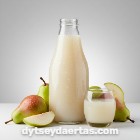
Calories and sugar in pear nectar
The canned pear nectar reference used here has no added ascorbic acid. Per 100 g it provides 60 calories and 15.16 g total sugars. A weighed 150 g amount supplies 90 calories and 22.74 g sugars. The source's one-cup measure weighs 250 g and provides 150 calories and 37.9 g sugars. It does not mean a 200 ml drinking glass holds 250 g.
Are nectar, pear juice and fresh pears the same?
They are different foods. Pear nectar may combine pear puree with water and sweeteners; check the brand's ingredients and fruit content. For example, Goya's carton nectar contains water, pear puree, added sugar and vitamin C. That branded formula is not treated as identical to the USDA reference without added ascorbic acid used in this table.
The reference nectar has 0.6 g fiber and 0.11 g protein per 100 g. It should not be treated as interchangeable with the structure and fiber of a fresh pear. Fruit in the name does not mean sugar-free. Total sugars and added sugars also describe different things; this source does not separately quantify added sugar. For a whole-fruit example, see the fiber and sugar calculation for skin-on Bartlett pear; its cultivar and preparation differ from nectar.
A nectar with no added sugar can still contain fruit sugars. The 140 ml Almarai apple nectar carton declares 10.3 g total sugars; that label cannot fill the unreported added-sugar amount for pear nectar.
Does adding water reduce the sugar?
If you mix 100 g nectar with 100 g water and drink all of it, the original 60 calories and 15.16 g sugars remain. You have made a larger drink. Drinking half the mixture instead gives the equivalent of 50 g nectar: 30 calories and 7.58 g sugars. Water does not remove the sugar already present.
The same calculation works in a recipe. Dividing 100 g nectar equally between four servings adds 15 calories and 3.79 g sugars from nectar to each. Count yogurt, fruit or other ingredients separately.
Comparing glasses and brands
If your carton gives values per 100 ml, calculate volume portions from that label. Do not substitute this page's grams for milliliters without a verified density. Fruit content, added sugar and vitamin fortification can differ between brands. Compare equal amounts and actual labels rather than assuming nectar is universally healthier than juice. Reading total sugars separately from a no-added-sugar claim also matters for drinks named after fruit.
Fruit drinks also need a percentage check: Dimes Active sour cherry 1 L declares at least 20% fruit and lists beet sugar. Its 94 kcal per 200 ml comes from its own label, not the pear nectar table per gram.
Reference scope
Nutrients come from USDA SR28 pear nectar record 09262. Goya's own ingredient list illustrates a product difference; its nutrients were not copied into this table. These figures do not establish constipation treatment or an individual daily amount.



