

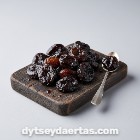
Calories in stewed low-moisture prunes
The USDA reference for stewed dehydrated, low-moisture prunes provides 113 kcal per 100 grams. “Low-moisture” describes the starting product; the weight used here is the cooked edible amount. Equal weights of dry prunes and rehydrated cooked prunes do not have the same nutrient concentration.
A bowl, a cup or a few prunes?
The source lists one cup of the cooked product as 280 g, providing 316 kcal. That does not make every household bowl a 280 g serving. A smaller weighed 50 g amount supplies 57 kcal and 14.85 g carbohydrate. Fruit size and absorbed water vary, so weigh the cooked portion instead of assigning a fixed calorie value to two prunes.
The 9.5 g piece listed for uncooked pitted prunes is a separate source measure. Two cooked fruits should not be assigned that dry piece weight, because water uptake varies.
Ways to use the cooked fruit
Softened prunes can be added to yoghurt or porridge. Count added sugar, honey and other ingredients separately; a syrup-based compote is not fully described by this record. There is no universal number of prunes or ideal time of day to eat them. Choose a portion with the rest of the meal's carbohydrate sources in mind.
If cooking fresh fruit, the cooked fresh-plum record is a separate example: about 71 kcal per 150 g. That value does not describe rehydrated dried prunes.
Why are fibre and sugar missing?
This specific historical record does not report fibre or total sugar. Missing data do not mean fibre-free or sugar-free, and values were not borrowed from another prune entry. General prune research cannot establish an exact constipation-treatment effect or dose for this preparation. Potassium is 353 mg per 100 g; someone following an individual potassium restriction needs to consider the portion separately. The sugar calculation for canned prune juice describes a separate measured liquid product; its figures cannot fill the cooked fruit record’s missing sugar value.
The preparation behind the figures
The source is USDA SR28 NDB 09290, “Prunes, dehydrated (low-moisture), stewed”. Uncooked low-moisture prunes, 09289, and ordinary stewed prunes, 09292, are separate references. Vitamin A is retained as 26 µg RAE per 100 g.



