

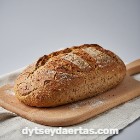
Rye bread: slices, whole grains and the label
How many calories are in one slice?
Rye bread provides 259 calories per 100 g in this reference. A thin 25 g slice has 65 calories; a regular source-size slice weighing 32 g has 83. A thick 50 g slice has 130. The USDA entry is generic rye bread, not a label for every bakery loaf or a guarantee of 100% whole-grain rye flour. [1]
| Slices | Total weight | Calories |
|---|---|---|
| 1 | 25 g | 65 |
| 2 | 50 g | 130 |
| 3 | 75 g | 194 |
| 4 | 100 g | 259 |
Two 32 g slices instead weigh 64 g and provide 166 calories. Enter the actual weight in the calculator, especially with hand-cut bakery bread. Cheese, butter and other sandwich fillings contribute their own energy.
Is rye bread good for weight loss?
It can fit into a weight-management plan, but there is no universal daily slice allowance. Bread with eggs or cheese and vegetables makes a different meal from bread alone. If the meal also contains rice, pasta or potatoes, consider those portions together. Switching the name of the bread does not by itself create an energy deficit.
For a useful comparison with white, bran or whole-wheat bread, start with equal weights. The bread label and portion comparison explains why differently sized slices can mislead. A lower calorie figure per slice may simply mean a smaller slice.
Is dark rye healthier than whole wheat or sourdough?
These labels describe different things. Rye names a grain, whole grain describes which parts of the grain remain, and sourdough describes fermentation. Bread can be both whole-grain rye and sourdough. Dark colour alone does not prove a high fibre content. Check the flours used, their proportions where listed, and fibre and salt per 100 g.
This reference has 5.8 g fibre, 8.5 g protein and 48.3 g carbohydrate per 100 g. A thin 25 g slice contributes 1.45 g fibre. Products differ, and the word rye does not guarantee a lower blood glucose response than every other bread. There is no single healthiest bread for everyone, nor does the name establish an anti-inflammatory treatment. For bowel habits, the bread, grains and fibre section looks at the rest of the meal too.
When baking with rye flour at home, record the grams of each flour separately. Do not apply the dry-flour table to a baked slice; water, other ingredients and the final loaf weight change the calculation.
The historical 140 g Mr. NO rye tuna sandwich record does not declare fiber. Use the finished product’s label instead of applying generic rye-bread fiber to the whole sandwich; bread and filling are weighed together.
The Demirali sourdough village bread example lists wheat flour; the sourdough name alone is not a wholegrain declaration. Its 50 g portion provides about 107 kcal and 1.68 g fibre.
The 400 g İHE rye loaf lists wheat flour first and gives the rye flour content as 30%.
Does rye bread contain gluten?
Yes. Rye naturally contains gluten, and sourdough fermentation does not make ordinary rye bread gluten-free. It is unsuitable for coeliac disease. If you manage diabetes, count the carbohydrate in the amount eaten rather than treating rye as unlimited. [2]


