

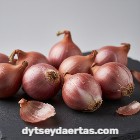
Shallot calories start with peeled, edible weight
Raw shallots provide 72 calories per 100 grams of peeled edible bulb. The table uses USDA SR28 record 11677. It does not describe freeze-dried shallots, crispy fried shallots or a finished dish containing oil. [1]
How many calories are in one shallot?
A small bulb and a large cluster will not weigh the same. Peel and weigh the amount you will eat: 25 grams supplies 18 calories and 50 grams supplies 36. The 25-gram amount is a weighing example, not a standard size for one shallot.
The reference tablespoon of chopped shallot weighs 10 grams and provides 7 calories. A cup of whole bulbs is a different measurement. Chop size, heaping and cup dimensions can all change the amount, so weigh it when you need a closer estimate.
Are shallots healthier than ordinary onions?
Shallots offer a different flavor and commonly smaller bulbs. Yellow or red skin does not identify a separately measured variety in this table; this is a general raw-shallot reference. The raw bulb onion entry covers a different food identity. A difference between their calorie figures does not establish that one is healthier for everyone.
Using shallots in meals, including during weight loss
Add them for flavor in salads, roasted vegetables or a cooked dish. A 25-gram raw amount supplies about 4.2 grams of carbohydrate and 0.8 grams of fiber. The nutrients in a small garnish should not be confused with the values for a full 100 grams.
Crispy fried shallots need their own calculation. Count the oil used at home, or use the package label for a prepared topping. Cooking can also remove water and change the concentration per 100 grams. Shallots can be part of a weight-management meal without being a weight-loss treatment themselves. For the plain cooked-shallot portion calculation, use cooked edible grams rather than assuming 50 g raw will still weigh 50 g after cooking.
For meat stew with shallots, distinguish the raw onion amount from the cooked serving weighed with meat and sauce. Lean meat does not make a dish fat-free when butter and olive oil are added.
Can shallots cause bloating?
Fructans in the onion family can contribute to gas and bloating in some people with sensitive bowels. Amount and tolerance vary; there is no universal safe bulb count on this page. If you follow a low-FODMAP plan, assess shallots within that plan rather than assuming cooking makes them symptom-free. [2]



