

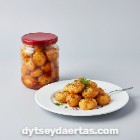
Portions from the Dardanel fried-mussel tray
The fresh Dardanel Midye Tava tray reference contains 239 kcal, 17.5 g protein and 12 g fat per 100 g. The 180 g reference portion totals 430 kcal. A weighed half of 90 g provides 215 kcal and 15.75 g protein.
Different from plain or stuffed mussels
The coated product contains 16 g carbohydrate per 100 g. Plain cooked mussel meat lacks that coating, while Turkish stuffed mussels contain a rice filling. The shared mussel name does not make their nutrition tables interchangeable. A fixed piece count also cannot replace a measured portion weight.
The supplied sauce and extra dip
The historical tray photograph says a special sauce is included, and the launch announcement confirms it. Its separate weight and nutrition were not provided, so a precise calorie deduction for leaving the sauce behind cannot be calculated. Record mayonnaise or another dip added at the table as an extra ingredient. Do not invent a second sauce portion for sauce already supplied in the pack.
Ready-to-heat tray versus frozen box
The fresh product announced in 2015 could be reheated or briefly fried for serving. The frozen Midye Tava box has a separate storage, package and nutrition basis. A broad timing statement in an old announcement is not a complete appliance instruction; follow your own pack. Additional frying oil cannot all be assigned to the food unless its absorption is known.
Dardanel Mediterranean-style Vongole is a seasoned clam preparation with oil. It needs its own entry when chosen instead of the crispy coated tray; sauce and coating matter as well as the seafood type.
Reference
The readable manufacturer artwork lists 239 kcal, 16 g carbohydrate, 17.5 g protein and 12 g fat per 100 g, consistent with Diyetkolik's 180 g entry. Other small-print figures could not be read reliably. Salt, sugars, saturated fat, fiber and micronutrients remain unknown. The reference describes the historical fresh tray and does not guarantee current stock or a later formula.


