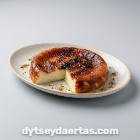
The caramelized base and the weight of a slice
A 155 g slice of this kazandibi provides about 201 kcal. A weighed 100 g amount gives about 130 kcal, while 180 g gives 233 kcal. The width and thickness of the cut matter, so one slice does not have a fixed weight.
The browned sugar base is included
The eight-serving recipe uses a liter of milk, rice flour, wheat starch, sugar and margarine. Icing sugar scattered over the tray also belongs to the recipe. This version contains no chicken. A 155 g serving supplies about 30.1 g carbohydrate, 4.9 g protein and 5.8 g fat. Ice cream or kaymak added at serving contributes separately.
Comparing a homemade slice with a ready-made pot
For a packaged dessert, check its net weight and its own nutrition label. A smaller pot does not necessarily use a less energy-dense recipe; milk, sugar and fat proportions can differ. To reduce the amount of this dessert, weigh a smaller piece of the same recipe instead of borrowing another product’s serving count.
The 150 g Eker kazandibi product also contains chicken breast. It should not share a nutrition entry with this chicken-free home recipe.
The recipe behind the numbers
The calculation uses the displayed 155 g/200.83 kcal serving and separate 100 g column for the Diyetkolik kazandibi recipe. Its prose mislabels the 100 g macronutrients as serving amounts; that discrepancy is corrected here. Total sugars are not separately reported, so total carbohydrate is not treated as sugar.