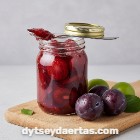
Dietitian's Tips for Consuming Plum Jam
This plum-jam reference contains 273 kcal per 100 g. The amount used at breakfast is usually smaller; weighing it gives a clearer calculation than describing a spoon as level or heaped.
Counting a thin spread of jam
5 g of jam supplies about 14 kcal, 10 g about 27 kcal and 20 g about 55 kcal. Increasing the amount from 10 g to 20 g doubles the jam’s contribution. Bread, butter or cheese are not included in these figures; each topping and the bread have their own amounts to count.
Will homemade jam have the same value?
The plum-to-sugar ratio, water evaporated during boiling and final jarred weight affect the result. For your own jam, divide the ingredients’ total nutrients across the finished weight. Knowing the number of plums or judging how thick the jam looks is not enough.
Record added granulated sugar by weight when calculating a recipe. When using a prepared jam’s table, do not count the sugar already included a second time.
Sugar information and product choice
The reported 66.79 g carbohydrate per 100 g is not a measurement of total sugars. The source does not provide a sugar value, so it remains unknown here. A product sold with no added sugar should also be assessed using its own label rather than this general jam table.
Source note
The source is the Diyetkolik plum-jam record. The complete recipe, pectin use and finished yield are unspecified. Total sugars, saturated fat and cholesterol are unknown; vitamin A reported in IU was not converted to RAE.