

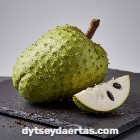
Soursop pulp: calories and edible weight
Soursop, also called guanabana or graviola, is the fruit of Annona muricata. A 150 g amount of the white pulp, with skin and seeds removed, provides 99 kcal, 4.95 g fiber and 30.9 mg vitamin C. This table describes raw fruit pulp, not leaf tea, extracts or capsules.
Remove the seeds before weighing
Wash and cut the ripe fruit, separate the white flesh from the skin and remove the black seeds. Eat only the pulp. If making a smoothie, remove the seeds individually before putting the pulp into the blender; do not grind them into the drink.
Zero the scale with an empty bowl, then add the prepared pulp. A 100 g amount contains 66 kcal, 16.84 g carbohydrate and 13.54 g naturally occurring sugar. At 150 g, sugar rises to 20.31 g. Having no added sugar does not make the fruit carbohydrate-free.
What a bowl of pulp contributes
The USDA one-cup pulp measure weighs 225 g and provides 149 kcal, 7.43 g fiber and 46.35 mg vitamin C. A household bowl is not necessarily that size. If you add a weighed 150 g amount to yogurt, the fruit contributes 99 kcal and 4.95 g fiber, with the yogurt counted separately.
Fiber and vitamin C are concrete nutritional contributions. Straining the pulp into juice can change the fiber content, while nectar may contain added water and sugar. A glass of soursop drink therefore needs its own recipe or label rather than the raw-fruit table.
Fruit is different from a graviola supplement
Eating pulp is not the same exposure as taking a concentrated leaf extract or capsule. MD Anderson's review of soursop explains that human evidence does not establish it as a cancer treatment. Neither fruit nor supplements should replace cancer care. The name graviola does not define a safe daily supplement dose; discuss supplements with your care team, especially if taking medication.
The nutrition reference is USDA SR28 record 09315, raw soursop, which excludes seeds and skin from edible weight. These are reference values, not a laboratory analysis of each fruit. Weighing prepared pulp avoids counting the substantial inedible portion as food.



