Dry-roasted cashew calories: use the unsalted reference
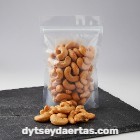
Dry-roasted cashews without added salt provide 574 calories per 100 g and 172 per 30 g. Oil-roasted, salted or sweet-coated products need their own labels. The weights here refer to edible cashew kernels. [1]
How many calories are in one cashew, ten cashews or a cup?
Kernel size varies. If ten cashews actually weigh 20 g, they supply 115 calories; if they weigh 30 g, they supply 172. That example does not make every cashew a 2 g kernel. A handful is equally dependent on the hand and how it is filled.
The source lists a tablespoon as 8.6 g, an ounce as 28.35 g and a cup of whole and half kernels as 137 g. That cup contains about 786 calories. Half a reference cup weighs 68.5 g and supplies 393 calories, so “half a cup” should not be confused with a small handful.
Are roasted cashews different from raw cashews?
Roasting can change moisture and the concentration of nutrients per 100 g. Compare the same weight with the unroasted cashew entry. Roasted does not necessarily mean salted: check the ingredients for salt, oil and coatings. This unsalted reference contains 16 mg sodium per 100 g.
Protein, iron and magnesium in a 30 g serving
Thirty grams supplies 4.59 g protein, 13.91 g fat, 9.81 g carbohydrate and 0.9 g fibre. It also contains 1.8 mg iron and 78 mg magnesium, calculated from the source. The magnesium food and serving table puts that amount alongside other foods.
Cashews are not a like-for-like protein replacement for a portion of meat or pulses. Much of their energy comes from fat. There is no single healthiest nut for everyone; compare equal weights, fibre, protein and your own preferences rather than treating almonds and cashews as interchangeable.
Can you eat roasted cashews while dieting or during pregnancy?
They can fit ordinary meals if you do not have an allergy or an individual restriction. Pregnancy does not establish one universal kernel count. Setting aside a weighed amount is easier to track than eating straight from the bag; 20 g and 30 g are examples, not compulsory daily portions. NHS: nuts during pregnancy
Cashews are tree nuts. Roasting does not make them a safe choice for someone with a cashew allergy; follow the relevant avoidance plan and check allergen information on the package. FDA food allergy information