

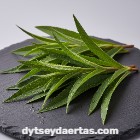
Fireweed leaves: a raw-leaf nutrition reference
The USDA entry for raw fireweed leaves gives 103 kcal per 100 grams. It describes the edible leaves of Epilobium angustifolium, not tea, flowers, roots or an extract. One hundred grams is a comparison basis, not a recommended daily amount. [1]
Calories in a cup of chopped leaves
The reference cup of chopped leaves weighs 23 grams and supplies 24 kcal. It contains 2.44 grams of fibre, 98.67 mg calcium and 1.08 grams of protein. Cup size and packing affect the weight. A smaller weighed 10 grams provides 10 kcal.
Does fireweed tea have the same nutrients?
No. Eating leaves differs from steeping them and straining the liquid. You cannot assume that all their fibre and minerals enter the water. This entry therefore cannot establish the calories or calcium in a cup of tea. Drying and cooking also change water content, so 100 grams of cooked leaves should not inherit the raw values unchanged. With dandelion leaves and tea, the same measurement issue arises, although the two plants have different nutrient compositions.
Understanding calcium and vitamin A
Vitamin A is reported as 180 micrograms RAE per 100 grams, not 180 IU. A 23-gram portion provides 41.4 micrograms RAE. Calcium intake likewise depends on the amount eaten. A composition table does not establish how much calcium is absorbed or show that the leaves treat a deficiency.
Plant identity and food use
NC State Extension describes cooked leaves as an edible use and dried leaves as a tea ingredient. Shared common names do not establish that plants are the same species. Do not collect plants for eating based only on a name or photograph; use a reliable food supply with correctly identified plants. [2]
The nutrient figures do not demonstrate benefits for prostate conditions, fluid retention or other illnesses. Doses and adverse effects of tea or extracts cannot be inferred from a raw-leaf food entry.
[1] USDA Standard Reference 28, entry 11985. [2] NC State Extension, fireweed. Not the separate Alaska young-leaf entry 35038; sugars are unreported.



