

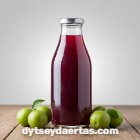
Dietitian's Tips for Consuming Plum Juice
This plum-juice record provides 49 kcal per 100 g. A drink made from fresh plums is distinct from dried-prune juice. Different fruit content in a purchased product, or sugar added at home, calls for that product’s label or a separate recipe calculation.
A weighed 200 g portion
200 g of the reference juice supplies 98 kcal and about 21.37 g carbohydrate. Tare the empty glass to weigh only the drink. Values here are per 100 g; a 200 ml glass is not assumed to hold 200 g.
Plum juice, nectar and prune juice
Read the full product name. Plum nectar and plum juice need not have the same formulation, while prune juice is made from dried plums. Picking the lowest calorie figure among these drinks and applying it to a different one would give a misleading calculation.
Count additions to a homemade drink
Boiling plums in water and straining them does not establish that all the whole fruit’s fibre remains in the drink. Record any weighed sugar or honey and the final amount of drink. Dilution changes the share in each glass, not the total energy of the original amount of juice.
Source note
Values follow the Diyetkolik general plum-juice reference, rather than a current branded label. Reliable total sugars, fibre, saturated fat and cholesterol values were unavailable. Vitamin A in IU was not treated as RAE.



