

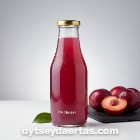
Dietitian's Tips for Consuming Plum Nectar
This plum-nectar table uses 55 kcal per 100 g. Fruit content and formulation can differ between brands, so the general reference does not replace the label on a particular carton.
Weighing the drink in your glass
Tare an empty glass and add 200 g of nectar: the calculation is 110 kcal and about 26.37 g carbohydrate. That is the weight of the drink. A 200 ml mark does not establish the same weight. If your carton provides values per 100 ml, use its label with the volume you actually drink.
Checking fruit content and sugars
Read the ingredient list and declared fruit content on the package. This record does not specify total or added sugars, so 26.37 g carbohydrate cannot be called “26.37 g sugar.” A sweet or tart taste does not substitute for the ingredient information.
Nectar, juice and whole plums
Nectar, plum juice and pitted fresh plums are separate foods despite sharing the fruit’s name. Count any whole fruit eaten alongside the drink separately. Diluting nectar with water does not add energy, but pouring the same amount of nectar into a larger glass does not remove its energy either.
Source note
Values follow the Diyetkolik plum-nectar reference per 100 g. A volume-named serving was not treated as density evidence. Fibre, total sugars, saturated fat, cholesterol and vitamin A in RAE remain unknown.



