Fresh spearmint leaf nutrition
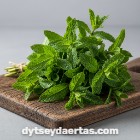
Spearmint here means the fresh edible leaves of Mentha spicata. They provide 44 kcal per 100 grams, although culinary amounts are often only a few grams. Do not treat the 100 g table as the value for a handful. Peppermint, Mentha piperita, dried mint, tea and mint oil require separate references. The distinction between peppermint and spearmint helps identify the appropriate table.
How much do two leaves weigh?
The source records two leaves as 0.3 g and two tablespoons of fresh leaves as 11.4 g. Leaf size and how tightly a spoon is filled can vary. A weighed 5 g amount provides 2 kcal and 0.34 g fibre. For salads, yogurt or drinks, use the edible leaves after removing discarded stems. When using dried leaves, consider the dried mint reference of a 0.5 g teaspoon and 1.6 g tablespoon separately; fresh-leaf measures do not transfer to dried leaves.
Putting iron and vitamin figures in perspective
The 11.87 mg iron listed per 100 g may look substantial, but 5 g leaves contain 0.59 mg. The same amount provides 0.67 mg vitamin C and 10.15 µg RAE vitamin A. A small garnish should not be credited with the nutrients in a much larger quantity. Total sugars are unreported, while fibre is available for this reference.
Does spearmint tea have the same nutrition?
If the leaves are removed after steeping, their entire fibre and mineral content cannot be assigned to the drink. Honey, sugar and milk added to tea count separately. Fresh culinary leaves can flavor food; there is no required number to eat each day. This food table does not establish hormone treatment, benefits for a particular organ or exercise-performance effects for tea, capsules or oil.
The cucumber, lime and mint lemonade example blends 5 g fresh leaves and keeps them in the drink. Its complete 390 g unstrained mixture has a different basis from tea whose leaves are steeped and discarded.
Sources and calculation limits
USDA SR28, 02065. Values apply to edible grams of the specified product or preparation.