Sugar and portions in fresh white grapes
White grapes may look pale green or yellow; the name does not establish a single cultivar or sweetness level. The calculation covers fresh edible berries. Leave bunch stems off the scale, and keep juice and raisins separate from fresh-fruit portions.
Calories in 100 g and 200 g
100 g fresh white grapes provides 69 kcal, 15.2 g carbohydrate and 14.6 g sugars. A 150 g portion gives 104 kcal and 21.9 g sugars; 200 g gives 138 kcal and 29.2 g sugars. Naturally occurring fruit sugars still contribute to the carbohydrate total.
One grape or ten grapes cannot be assigned a fixed calorie count without a weight. If your ten berries weigh 50 g together, they provide 35 kcal and 7.3 g sugars. Larger berries give a larger total. Weighing your usual serving once is more useful than relying on a universal berry count.
Fresh grapes and raisins
The 100 g fresh-fruit reference contains 1.5 g fibre and 200 mg potassium. Drying removes water, so a small volume of raisins holds more energy and sugars. Compare each food by its own weight rather than exchanging equal handfuls without checking the amount.
A 30 g golden-raisin portion provides about 91 kcal and 17.76 g sugars, compared with 69 kcal and 14.6 g sugars in 100 g fresh white grapes. The portions differ: the example shows why a small dried-fruit portion needs its own weight.
Putting together a bowl
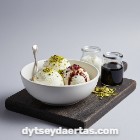
Remove the stems and weigh the berries before adding them to yoghurt or a fruit bowl. Yoghurt, nuts and honey contribute their own nutrients; additional sweetener may be unnecessary if the grapes already taste sweet enough. Grapes alone are not a substantial protein snack: 100 g provides only 0.7 g protein.
Combining 150 g plain whole-milk yoghurt with 100 g fresh white grapes gives about 161 kcal, 5.91 g protein and 21.59 g total sugars. Yoghurt supplies 6.99 g of the sugars and grapes 14.6 g; the recipe includes no added honey or sugar.
Source: Swiss Food Composition Database 7.1, ID478, fresh white grapes, per 100 g edible berries. Cultivar and ripeness vary. No universal berry or cup weight is assumed.