

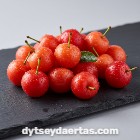
Calories in raw acerola fruit
Raw edible acerola, also called Barbados or West Indian cherry, provides 32 calories per 100 grams. USDA identifies Malpighia emarginata, not ordinary sweet cherry. Seeds and stems are excluded from edible weight.
One fruit and a 50-gram portion
The reference fruit has 4.8 grams of edible flesh and provides about 2 calories. A weighed 50 grams supplies 16 calories, while the source's 98-gram cup supplies 31 calories. Fruit size varies, making the count measure approximate.
Juice, dried powder, tea blends and tablets require separate calculations. Water loss, added sugar and other ingredients can change values per gram. A spoonful of powder cannot be assigned the composition of the same weight of fresh fruit. The acerola-juice calorie and sugar calculation uses a record separate from whole fruit.
Understanding the vitamin C value
The historical reference reports 1677.6 mg vitamin C per 100 grams, or 838.8 mg per 50 grams. Cultivar, ripeness, storage and processing can change the actual amount. A high reference value does not establish the same content in every product or mean that more is always better.
NIH notes that excessive vitamin C can cause diarrhoea, nausea and abdominal cramps. Consider total intake when combining fruit and supplements; people with iron-overload disease should discuss high doses with their care team. A fruit-composition table is not a supplement dosing guide.
Does acerola cause weight loss?
Containing vitamin C does not demonstrate a fat-burning effect. Acerola can be a fruit choice within a meal; slimming-tea advertising does not establish an effect of fresh fruit. Fibre is 1.1 grams per 100 grams. Total sugars are not separately reported, so a zero-sugar claim cannot be made.
Wash fresh fruit and remove inedible parts. For juice, use its separate nutrient values and check for added sugar. Fruit is not a replacement for treatment of an infection or another disease.



