

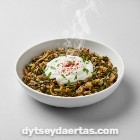
Boiled chard on the plate
This cooked chard reference describes Swiss chard that has been boiled and drained without added salt. It provides 20 kcal, 1.88 g protein and 2.1 g fiber per 100 g. Sautéed chard, rice dishes and stuffed leaves are different preparations.
Weighing the cooked portion
The USDA cup of chopped cooked chard weighs 175 g and supplies 35 kcal, 3.29 g protein and about 3.68 g fiber. Half that measure is 87.5 g, about 18 kcal. A household bowl may hold a different weight. Weigh after draining; entering the weight of a raw bunch into the cooked table overlooks trimming and water changes.
Iron and sodium
Cooked chard contains 2.26 mg iron per 100 g, or about 3.96 mg in the 175 g source cup. That is the amount in the food, not the amount the body necessarily absorbs. The same cup supplies about 961 mg potassium and 313 mg sodium. Cooking without salt does not remove the vegetable's naturally present sodium; the phrase alone is not enough for a specific sodium plan.
Adding oil or yogurt
When serving boiled chard as a side, record added oil and yogurt in their own amounts. For example, dividing 350 g drained chard into two equal plates gives each plate 35 kcal from the plain vegetable. If the oil is not divided evenly, do not automatically assign half to each plate. The chard table describes the vegetable contribution, not the whole meal.
When chard is served as meat-filled rolls, the filling is part of the weighed food. The plain vegetable value per 100 g does not describe the whole roll.
Swiss chard is not collard greens
The food here is Swiss chard, not collards or kale. The Turkish title “kara pazı” does not change that reference identity. Raw leaves, boiled leaves and an oil-based chard dish also need separate calculations.
Source note
USDA SR28 11148 describes boiled, drained Swiss chard without salt. Per 100 g it reports 179 mg sodium, 58 mg calcium and 18 mg vitamin C. Vitamin A is 306 µg RAE, kept distinct from other vitamin A units.



