

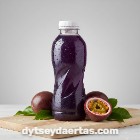
Purple passion fruit juice: portions without the pulp assumption
Calories per 100 g and per cup
Raw purple passion fruit juice provides 51 kcal per 100 g and 77 kcal per weighed 150 g. The USDA reference cup weighs 247 g and supplies 126 kcal. That reference does not mean every drinking glass holds the same weight. This calculator uses grams; 100 ml must not automatically be entered as 100 g. [1]
Does juice with no added sugar still contain sugar?
Yes. This entry reports 13.4 g total sugar per 100 g, or 20.1 g in 150 g. The same 150 g contains only 0.3 g fibre. No added sugar is different from sugar-free. Diluting the juice with water does not remove its sugar: if you drink the whole mixture, count the full amount of juice used.
Vitamins and a place in your diet
A 100 g amount supplies 29.8 mg vitamin C and 278 mg potassium. Those figures do not make it a fat-burning drink or a treatment for fluid retention. Weigh the amount you want rather than letting the size of the glass set the portion. Drinking juice alone does not provide the same fibre as eating the fruit’s edible pulp. The food examples for daily vitamin C show options beyond drinks.
Yellow juice, nectar and whole passion fruit
USDA 09232 describes the purple fruit’s juice. Yellow passion fruit juice, whole fruit, sweetened nectar and cocktails have separate nutrition values. The vitamin and fibre calculation for yellow passion fruit juice is one example of that distinction. Include sugar added at home. For a bottled product, check both the fruit percentage and whether the label is per 100 ml or per 100 g. The 251 g reference-cup calculation for canned guanabana nectar describes a different fruit and preparation; that weight is not universal for drinking glasses. Claims about passionflower leaf tea or supplements do not describe this fruit juice. Sweet granadilla (Passiflora ligularis) is a separate species; its pulp and edible seeds are not the same food as this purple-fruit juice.



