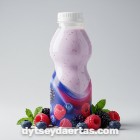
Danone forest-fruit kefir: reading the numbers
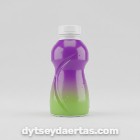
The named Diyetkolik reference gives 172 kcal and 5.6 g protein for 200 g of Danone forest-fruit kefir. Half that amount, 100 g, provides 86 kcal and 2.8 g protein. The reference is not a verified current manufacturer label.
Does fruit kefir contain sugar?
Carbohydrate in fruit kefir may include milk and fruit sugars as well as any added sugar. The mass-based reference reports 14.7 g carbohydrate per 100 g but does not establish total sugars. It cannot support either a sugar-free claim or a claim that all 14.7 g is added sugar.
Sugars and total carbohydrate are separate label entries. Check whether the bottle reports per 100 g or per 100 ml, then calculate the amount you drink in that same unit. Fruit in the name, or how sweet it tastes, does not measure added sugar.
The two bottle sizes of İçim forest fruit kefir do list total sugars per 100 ml, with a different value for each size.
Comparing a plain kefir
The TürKomp plain-kefir example provides 116 kcal and 6.58 g protein per 200 g, compared with 172 kcal and 5.6 g protein in the forest-fruit reference. Changing flavour can mean changing formulation. The unreported fruit proportion and total sugars prevent assigning the energy difference specifically to sugar.
When adding fruit yourself, weigh the plain kefir and fruit separately. Extra fruit blended into an already flavoured drink is an addition; the entire blended weight should not be recorded as kefir alone.
Danone forest-fruit yogurt is a separate spoonable product. Its reviewed 400 g tub declares 11 g sugars per 100 g; that figure does not describe the kefir. Distinguish the product type as well as the fruit flavour when choosing an entry.
Using a glass as a serving
A weighed 150 g portion provides 129 kcal, 4.2 g protein and 22.05 g carbohydrate. The 192 ml retail size has not been established as equivalent to the database’s 200 g reference. A scale avoids treating the glass volume as a measured weight.
Reference limits
Calculations use Diyetkolik’s exact forest-fruit entry, 171.8 kcal per 200 g. A current manufacturer label was not found. The retailer’s zero saturated-fat and sodium figures are not treated as verified measurements; unreported fibre and micronutrients remain unknown. Banana and strawberry varieties retain their separate identities.
- Diyetkolik — forest-fruit kefir reference
- Migros — 192 ml product and ambiguous unit heading
- TürKomp — Kefir, Ankara; plain-kefir comparison
Migros lists 10.2 g sugars under a “100 g/ml” heading for the 192 ml product. The unresolved volume-versus-weight basis prevents its use in the gram calculation.