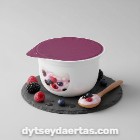
Portioning forest fruit yogurt
The reference here is the supplier label for Danone's 400 g forest fruit yogurt sold in Turkey, with 93 kcal per 100 grams. Activia, kefir and older pack formats have separate nutrition tables.[1] The 100 g Activia mixed-berry cup is a separate lactose-free product; this 400 g Danone tub’s energy does not describe that smaller cup.
A full tub or half a tub?
The whole 400 g tub provides 372 kcal; half, or 200 g, provides 186 kcal. A weighed 150 g portion supplies 140 kcal and 4.65 g protein. A tub is a pack size, not an instruction to finish it at one sitting. Oats or nuts added to it need their own calculation.
Fruit content and total sugars
This label lists 3% currants, 2.2% strawberries and 0.8% blackberries. The combined fruit content is 6%, equivalent to about 12 g of fruit ingredients in 200 g of yogurt. Milk and beet sugar are also ingredients. Total sugars are 11 g per 100 g, or 22 g per 200 g. The label does not separate naturally occurring milk and fruit sugars from added sugar, so the whole 22 g should not be described as added sugar.
Choosing a snack portion
Compare sugar and protein in the amount you will eat alongside calories. The name alone does not mean sugar-free or high-protein yogurt. Use equal weights when comparing with the sugar and protein figures for plain yogurt. Strawberry yogurt in the same family uses a different fruit mixture and nutrition table. A different formulation was found for the 120 g product, so use your own label when the pack differs. This yogurt contains milk; follow the pack's refrigerated storage instructions.