Dietitian's Tips for Consuming Emmental/Swiss Cheese
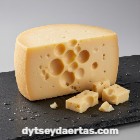
A 30 g serving of generic Swiss cheese provides about 118 calories and 8.09 g protein. It is a useful reference when comparing Emmental-style cheese, but it does not describe a particular producer or protected regional product.
How heavy is one slice?
The source defines a slice as 28 g, giving about 110 calories. A slice cut at home may be thicker or thinner. A weighed 30 g portion contains 9.30 g fat, about 5.47 g saturated fat and 267 mg calcium. Using 50 g brings the energy contribution to about 197 calories.
Grated and melted cheese
Grating can make the same weight look larger, while melting does not remove its calories. If 60 g is added to a baked dish and divided equally between four servings, each receives about 59 calories and 4.04 g protein from the cheese. A spoon or cup of grated cheese will not weigh the same as that volume of melted cheese.
Swiss cheese versus processed slices
Plain Swiss-type cheese, processed slices made with Swiss cheese and reduced-fat versions can have different nutrition panels. For a sandwich, compare the ingredient list and salt information as well as the product name. This generic reference supplies about 56 mg sodium per 30 g; that is not a salt guarantee for every brand.
Cheeses with a similar open texture need separate labels too. The 30 g label calculation for Bergen Kars gruyere gives about 119 calories and 0.81 g salt. This generic Swiss-cheese reference is not an analysis of that branded product.
The separate generic sliceable processed-cheese reference supplies 55 kcal and 360 mg sodium per 30 g. The word “processed” does not establish one nutrition panel for every slice.
Source
USDA SR28 entry 01040, “Cheese, swiss”, reports 393 kcal, 26.96 g protein and 890 mg calcium per 100 g. Vitamin A is 288 µg RAE, rather than the numerically different IU figure.