

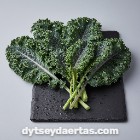
Raw kale leaves and cooked portions
The raw kale reference used here gives 49 kcal per 100 g. A weighed 50 g amount of leaves, after removing tough stems, provides about 25 kcal and 1.8 g fiber. These raw-leaf figures do not describe a cooked dish with oil or rice-filled rolls.
How much does a cup of kale weigh?
How tightly you pack the leaves makes a large difference. This USDA record defines a loosely packed cup of 1-inch pieces as just 16 g, providing about 8 kcal. A bowl filled with compressed leaves is not the same measure. Weighing your leaves avoids that uncertainty.
Nutrients in a weighed handful
The 50 g raw example contains about 75 mg calcium and 60 mg vitamin C. Those are raw-food values and should not be transferred directly to the same weight of cooked kale. Added oil, cornmeal or rice also contributes to the finished dish.
Boiled kale’s reference cup weighs 130 g. It is not the same serving as the loosely packed 16 g raw cup; use the cooked food’s own weight.
Collard leaves are a separate reference food. Similar local names for leafy cabbages do not justify combining their nutrient tables.
Kale reference and varieties
The table uses historical raw kale record 11233 from USDA SR28. It is not an individual analysis of every local variety sold as kara lahana. Boiled kale and collard greens have separate records.



