

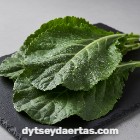
Collard greens: a raw cup and a cooked bowl are different
Calories in 100 g and a cup of collards
Trimmed raw collard leaves provide 32 kcal per 100 g. USDA's chopped raw cup weighs 36 g and provides 12 kcal. A weighed 50 g portion gives 16 kcal. Your bowl may hold more, especially if the leaves are packed tightly.[1]
Boiled, drained collards without salt have a separate entry: 33 kcal per 100 g, or about 63 kcal in its 190 g cooked cup. Do not treat a 36 g raw cup and a 190 g cooked cup as the same serving. Weighing winged bean leaves before cooking keeps the same distinction without borrowing a collard cup weight. Oil, rice or meat added to a dish must be counted separately. The raw-leaf calculation for Malabar spinach instead uses weighed grams because a verified cup weight is unavailable.
Fibre, calcium and vitamins
Raw leaves contain 4 g fibre, 232 mg calcium and 35.3 mg vitamin C per 100 g. The smaller 36 g cup supplies 1.44 g fibre and 83.52 mg calcium. Vitamin A is 251 µg RAE per 100 g; this is not the same numerical unit as IU. The source also reports 437.1 µg vitamin K per 100 g.
Are collards healthier than kale?
Collards are a non-heading leafy cabbage group, but this entry is not interchangeable with kale or every green called kara lahana in Türkiye. The 75 g half cup of boiled white cabbage is a separate measure. There is no need to rank one vegetable as the healthiest. Compare the actual type, preparation and portion. For canned collards, use the can's serving and salt declaration rather than this raw-leaf table. The unsalted boiled kale entry describes cooked leaves and should not use the raw-collard table.
What if you take warfarin?
A sudden increase or decrease in vitamin K intake can alter warfarin's effect. Discuss your usual portions with the team monitoring treatment instead of eliminating greens; aim for a reasonably consistent intake from day to day. Beet greens raise the same medication question. The advice does not apply identically to every blood thinner. Dandelion leaves need the same distinction between ordinary food portions and concentrated herbal preparations.[2]
Fibre and vitamins do not establish that collards cleanse the liver or treat a disease. They can add variety to a meal without having to provide every nutrient you need.



