

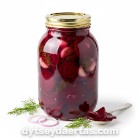
Pickled-beet calories depend on the preparation
USDA's canned pickled-beet reference contains 65 calories per 100 grams, including solids and liquid. It does not describe every homemade pickle, drained beet or plain boiled beet. A no-added-sugar recipe may differ considerably.
A small serving or a cup
A weighed 50 grams of the reference supplies 33 calories, while 100 grams supplies 65. The source cup of slices weighs 227 grams and provides 148 calories. This household measure is not a recommended daily portion, and your bowl may hold a different amount.
One beet or two slices has no universal calorie value: size and thickness matter. Weigh the amount you eat. Yoghurt, oil or dressing added to a beet salad contributes separately and is not included in the pickle table.
Sugars, iron and sodium
Per 100 grams, carbohydrate is 16.28 grams, total sugars 11.05 grams and fibre 0.8 grams. The source does not separate added from naturally occurring sugars. A sharp vinegar flavour is not evidence of a low-sugar product.
In 50 grams, total sugars are about 5.53 grams, sodium 74.5 mg and iron 0.21 mg. The red colour does not demonstrate enough iron to treat deficiency. Use the label on your jar when available because sugar and salt formulations vary between products.
The Berrak pickled-beet label is a different product example with added sugar. It lists 7 g total sugars per 100 g, versus 11.05 g in the generic solids-and-liquid reference; use the pack’s own panel for that product.
In raw beetroot, 6.76 g sugars per 100 g belong to the root’s natural composition. Subtracting that from the pickle’s 11.05 g does not establish its added sugar because the preparation and samples differ.
What can a portion contribute?
Pickled beets can add a vegetable and a different flavour to a meal. They do not independently cause weight loss or treat a disease. For carbohydrate counting, use the amount eaten rather than assuming that every vegetable pickle contains little carbohydrate. Include other salty foods in the same meal when managing sodium.
Quick vinegar pickles may not be fermented. The food name does not demonstrate a probiotic effect, and pairing the pickle with yoghurt does not establish an enhanced effect. For home preservation, follow a tested recipe and its ingredient proportions; a calorie calculation cannot validate a changed canning method. The distinction between fermented foods and probiotics explains why a vinegar pickle should not automatically be treated as a source of live beneficial cultures.
For example, Melis describes its pepper-sauced cabbage pickle as fermented, yet supplies no product-specific live-culture count or proven probiotic effect. The production method and a health effect are different information.



