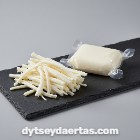
Weighing a portion of Turkish dil cheese
The generic dil cheese reference provides 271 kcal per 100 g. A weighed 25 g slice contains 68 kcal and 4.3 g protein; a 40 g amount contains 108 kcal and 6.88 g protein. Hand-pulled strips vary in thickness, so “one piece” is not a fixed measure.
Is dil cheese salt-free?
A mild taste or stringy texture does not establish a low salt content. The reference contains 300 mg sodium in 25 g, equivalent to approximately 0.75 g salt. At 40 g, the equivalent rises to 1.2 g. Brands can differ; use the salt declaration on your own package when available.
At an equal 30 g, the generic reference provides about 81 kcal, 5.16 g protein and 0.90 g salt equivalent. The Bahcivan Dil cheese panel gives 99 kcal, 7.5 g protein and 0.66 g salt for the same weight. Taste alone cannot reveal the difference; use the packaged product’s own label.
Using it at breakfast or in a toastie
Weigh the cheese before placing it on the bread rather than estimating its amount after melting. Melting alone adds no calories; butter on the grill or sauce in the sandwich adds to the meal. A larger cheese portion increases protein along with fat and salt.
A 25 g portion provides 150 mg calcium. Light versions and other brands may have different fat, protein and calcium values. Matching slice weights does not make their recipes equivalent, and generic US mozzarella string-cheese data should not replace Turkish dil cheese data.
Other cheeses that separate into strands, such as Ekici Tel Peynir, also need their own product tables. A similar appearance does not establish identical fat and salt amounts.
Scope of the reference
Figures use Diyetkolik's generic dil cheese record, not a current named-brand label. Salt equivalent is calculated from sodium. Vitamin A in IU was not converted to RAE; ambiguous saturated-fat units and unreported sugars were left out.