Dietitian's Tips for Consuming Bahçıvan Halloumi Cheese
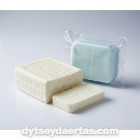
Bahçıvan’s current 225 g Hellim cheese declares 319 calories per 100 g. A portion weighed before cooking gives about 128 calories at 40 g and 160 at 50 g. Combining the older 250 g pack’s nutrient values with the current product’s weight would produce a misleading calculation.
What changes when halloumi is pan-cooked?
Before it goes into the pan, a 40 g portion contains 8.8 g protein, 10 g fat and 1.2 g salt. Water loss can make it lighter during cooking, so the composition per 100 g of cooked cheese is not automatically the same as the original label. Weighing the portion before cooking makes the calculation easier to follow.
Measure added oil separately. If all of a measured 5 g of edible oil is eaten with the portion, an avocado-oil reference of 884 calories per 100 g contributes about 44 calories, bringing 40 g of halloumi plus the oil to roughly 172. Oil left in the pan or fat released by the cheese prevents a precise absorption calculation unless those amounts are known. Follow the purchased pack’s cooking and storage instructions.
If you wrap the cheese in chicken, a serving of chicken and halloumi skewers includes the meat and vegetables as well.
Salt matters when comparing cheeses
A 50 g portion supplies 11 g protein alongside 1.5 g salt and 7.1 g saturated fat. The full 225 g pack contains approximately 718 calories and 6.75 g salt. How many meals share the pack affects the salt on each plate; browning the cheese does not demonstrate that its salt has disappeared.
At an equal 40 g, Bahçıvan Dil provides about 132 calories and 10 g protein, compared with 128 calories and 8.8 g protein in the halloumi. Calories are close, but the halloumi contains more salt. Choosing on calories alone would miss that difference. The halloumi contains cow’s, sheep’s and goat’s milk and is unsuitable for a milk allergy. The source of its rennet is not declared, so vegetarian suitability is not assumed.
Scope of the 225 g label
The source is the manufacturer’s current Hellim cheese page, with 22 g protein and 3 g salt per 100 g. The older 250 g panel’s 321 calories, 24 g protein, 2.5 g salt and calcium value were not carried over. Sodium was calculated from salt as 1,200 mg per 100 g; calcium and other micronutrients absent from the current panel remain unknown.