Elta Ada organic white cheese: calories and protein
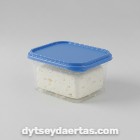
The supplier label for the 650 g Elta Ada Organic Full Fat White Cheese lists 312 kcal and 17.8 g protein per 100 g. A weighed 30 g piece provides about 94 kcal and 5.34 g protein. Use the weight of the cheese you cut for breakfast or crumble into a salad to calculate its contribution.
How much is one slice?
Thickness and shape change a slice’s weight. There is no verified fixed gram value for one slice of this product. A 20 g piece provides about 62 kcal, 30 g provides 94 kcal and 60 g provides 187 kcal. If you divide 60 g equally between two salads, each plate receives the equivalent of 30 g cheese. Dressing and other ingredients are additional.
If choosing the brand’s organic labneh as a bread spread, a weighed 30 g provides about 55 calories and 1.35 g protein. The white cheese’s protein value does not carry over to the spread.
Salt and fat in a 30 g portion
That portion contains 7.5 g fat, including 2.58 g saturated fat, and 0.93 g salt—equivalent to about 372 mg sodium. Consider this alongside olives or other salty foods in the meal. Organic production does not establish that the cheese is low in salt or calories. Compare equal weights when choosing between products. The explanation of salt and sodium labels distinguishes the two units and includes other foods in the meal. For example, 30 g of Bahcivan fresh white cheese provides 264 mg sodium, compared with 372 mg here. Match the exact product as well as its weight.
Ingredients and storage
The ingredients are organic pasteurized cow’s milk, rennet and salt. It is a milk product and carries a lactose statement. The supplier specifies refrigerated storage at 0–4 °C. Follow the actual package for instructions after opening.
Match the 650 g reference
The manufacturer confirms the 650 g white cheese identity, while the numerical panel comes from the supplier information published by Migros. The brand’s fresh white cheese or another pack with a different panel should not be treated as the same formula. Calcium, fiber and undeclared micronutrients remain unknown rather than being borrowed from another cheese.
Sources: Product supplier label; Manufacturer product information.