Bahcivan Cecil cheese calories and protein
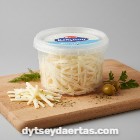
The manufacturer panel for Bahcivan's 200 g Cecil cheese pack lists 331 calories and 25 g protein per 100 g. A weighed 30 g amount provides about 99 calories, 7.5 g protein and 276 mg calcium. At 50 g, the amounts rise to about 166 calories and 12.5 g protein.
The strands are not all the same thickness or length. Weigh the amount on your plate instead of assuming a fixed calorie value per strand or handful. The entire 200 g pack provides 662 calories and 50 g protein; a package total does not make the pack a single serving.
Salt and saturated fat
A 30 g portion contains 7.5 g fat, including 4.5 g saturated fat, and 0.66 g salt. That salt declaration corresponds to 264 mg sodium. Count fat and salt alongside the portion's protein and calcium.
Olives and salted bread eaten at the same breakfast contribute additional salt. Adding 30 g of this cheese to a salad adds 99 calories to the vegetables; an oil-based dressing is extra. Separating the cheese onto a plate makes its amount easier to follow than taking strands straight from the pack. A 30 g portion of the brand’s full-fat fresh white cheese supplies about 67 calories and 4.2 g protein. Both contain 0.66 g salt per 30 g, so fewer calories do not mean less salt in this comparison.
How can it fit into a meal?
Use an actual amount, such as a weighed 30 g or 50 g, to plan the meal. Splitting 30 g equally between two sandwiches adds about 50 calories and 3.75 g protein to each from cheese alone. Bread and other fillings are separate. There is no single cheese portion that meets everyone's needs.
This product has 25 g fat per 100 g and should not be treated as a fat-free traditional Cecil cheese. Cecil, Dil and braided cheese are distinct products. Another brand or variety may have a different panel even when its appearance is similar. The matching panel for Bahcivan braided cheese refers to these two specific products; strands and braided pieces still need separate weighing.
Milk ingredients and source
The ingredients include pasteurized cow's milk, salt, cheese culture, calcium chloride, rennet and potassium sorbate. A declared 0 g sugars value does not establish that the cheese is lactose-free or suitable for someone with a milk allergy. Look for an explicit lactose-free statement when that matters to your choice.
Calculations follow the Bahcivan manufacturer panel for 200 g Cecil cheese. Unreported fiber, cholesterol and vitamins remain unknown. Follow the current nutrition panel and storage instructions on your own pack. The distinction between lactose-free and dairy-free explains why milk protein requires a separate allergy check.